
Dating in Sobriety: A Guide to Healthy Relationships
If you're worried that sobriety will ruin your dating life, here's what really changes—and why it may be better than you expect.

Man and woman lying together on the sand
My first date with Eduardo was a success, so he invited me to a second one. For the second date, we went on a group date with my friends to a bar. A band I loved was playing and I got excited about the evening and started drinking. I drank way too much and was incapable of driving myself home later that night. Eduardo drove me home and then took a cab back to his house. The next day, he came to see me to have a “talk about my drinking". He was concerned that since I managed to drink like that on our second date, imagine what the future would look like. He wasn't interested in dating a drunk.
We ended up dating for four years, but I started regulating my drinking heavily after that second date. I was embarrassed and humiliated and had put myself in a dangerous position—becoming drunk with somebody whom I didn't know that well. Anything could have happened. Luckily, I'm still here to tell the story.
You may think that dating in sobriety must be boring. The truth is that dating while an active alcoholic is worse—it's risky and dangerous and rarely ends well. So, today let's talk a little bit about dating in the life of an alcoholic and what dating in sobriety looks like.
The dangers of dating and alcoholism
Dating as an alcoholic isn't really that dangerous. After all, nothing has ever happened to you, right? You believe that because nothing has ever happened, that nothing will ever happen, but this is a fallacy. Dating while drinking is extremely risky and dangerous for several reasons.
Becoming inebriated in the company of strangers
The first issue we need to discuss is the act of drinking in the company of strangers. Drinking is such a normalized activity that we don't really see the need to take any special precautions when we go out partying. We assume that things will be ok, that we won't exaggerate, that our friends have our backs. But the moment you add alcohol to the equation, you lose control over the situation. Whatever happens, happens.
I have been in many situations in which I was too drunk to be on my own and yet I was on my own. Most of the time, things ended up fine. Sometimes, they didn't. As an active alcoholic, I didn't understand the risks that I was taking and ended up making many bad decisions.
The truth is that we don't really truly know people. The moment we allow ourselves to become drunk in the presence of strangers, we're exposing ourselves to all sorts of dangerous situations. You never know who's a good samaritan, who's a respectful date and who will take advantage of you when you are drunk.
Lack of good decision-making skills
Let's say you got yourself a good person on your hands, that still doesn't rid you of the dangers. Even though you found a respectful date, when you drink you lose all sense of right and wrong. Your decision-making capabilities are muddled up and you may end up doing things that you would never have done had you been sober.
On that second date with Eduardo, I should've kept my drinking to a minimum. I was still getting to know him, we were still flirting. Instead, I lost control of the situation, made terrible decisions and humiliated myself in front of a potential suitor. Drinking took away my ability to think straight and make good choices.
Inability to detect dangerous situations
Not only does drinking cloud your judgement, it causes you to see things in a distorted light. That creepy guy from the bar suddenly looks very friendly. No, this alley doesn't look scary at all. Yes, I would love a ride from you, stranger.
There is a little voice that tells us when things don't seem right. That voice becomes intensely muted when you drink alcohol. Not only do you lose the ability to make good choices, you can't even evaluate the choices that you have. A lot of people end up putting themselves in dangerous situations simply because they failed to detect the red flags. And if we can't filter out the red flags, who will do it for us?
Once an alcoholic, always…
The last piece of this puzzle is the creation of the alcoholic persona. If you tend to drink a lot in public, people will start to recognize you as the “drunk person"—the one everyone can count on getting drunk by the end of the night. You become an easy target for predators. You will be recognized wherever you go. You will develop a reputation that will precede you.
As you become known as the alcoholic person, you might start attracting only a certain type of partner. You might be talked about by others. People will be drawn to you because they know they just have to wait a few hours and you'll be ready. People will take advantage of you. It's a stereotype that can hurt you deeply and be very hard to get rid of.
Dating as an active alcoholic is risky and dangerous, but you have already lived through that experience. Now, things have changed. You quit drinking and are ready to start your new life as a sober partner. What comes next?
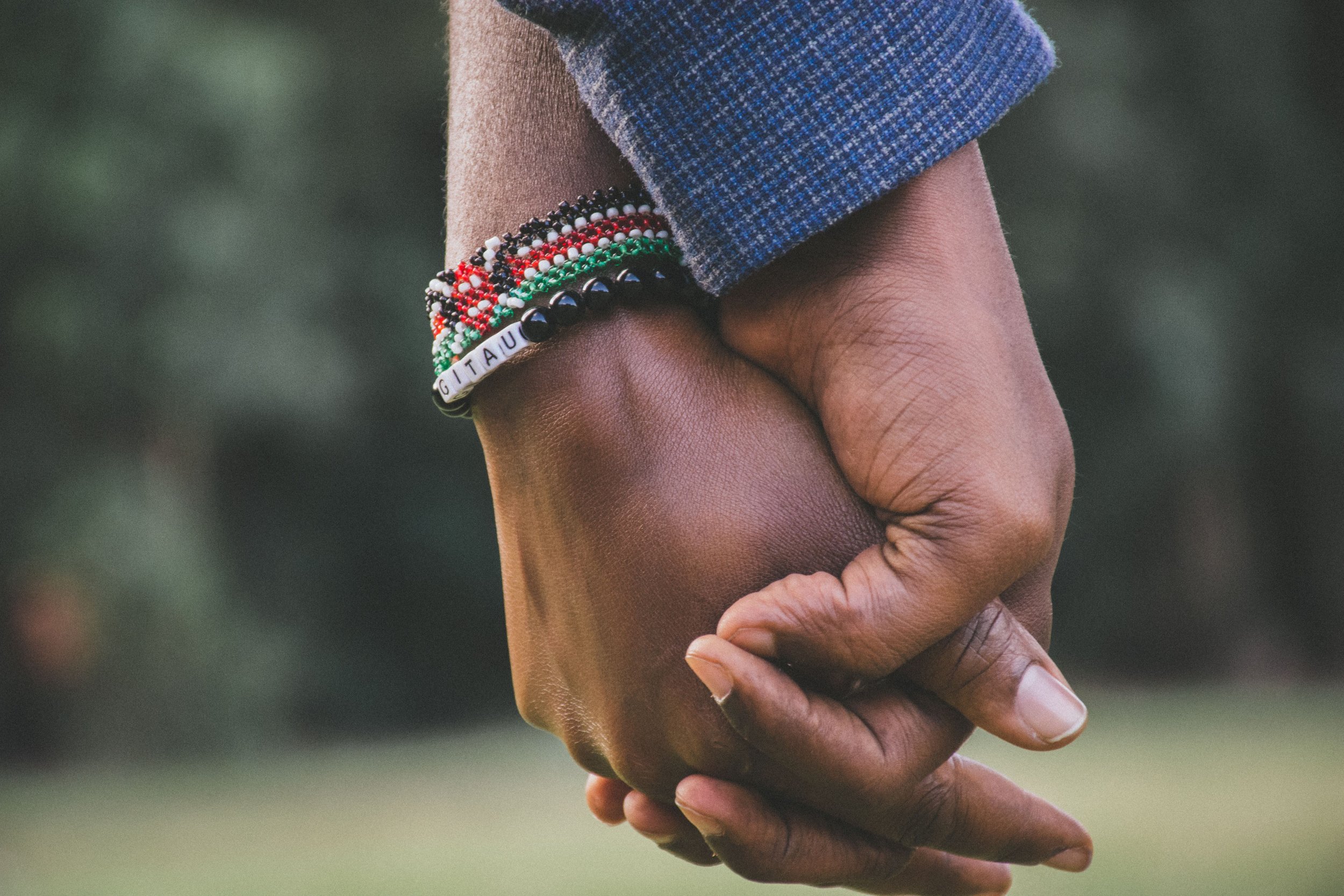
Two hands holding each other
Should you date early in sobriety?
Let's say that the hard part of being sober is done and you are keen on starting to date again. The first question you are probably asking yourself is: should I start dating? There isn't a right or wrong answer. People's sobriety journeys are different and may need different strategies.
If drinking was a big part of your lifestyle, then becoming sober means a complete change. You will probably lose many social circles, you will drop certain activities, you will need to choose new hobbies. One of the many things that will change is the way you date. If you no longer drink, a bar will probably not be the best idea of a first date. That already poses a challenge. After all, “would you like to grab a drink” is the way many relationships start.
If you feel comfortable with your new sober lifestyle, then dating shouldn't be a challenge. But if the road has been bumpy, then starting to date may add to the complexity of the moment. Many recovery programs recommend that people in early sobriety wait before they start dating. If they try to date the same way or the same people as they did before, this could be a recipe for a relapse. After all, you can't expect to do the same things you've always done and get different results.
So, can you date in the beginning? It's possible, but it will take a lot of compromise. Think about what kind of person you'd like to date from now on. Where would you like to go on dates? What could you do for fun as a couple? All these things are different now that you're sober. If you find this exciting and fun, then go for it. You might be ready.
If this sounds scary and new, then maybe give yourself some more time to figure out who the real sober you is. Learn to live your life first. Then you can bring someone else into it.
Learning who you are without alcohol
I had my first kiss when I was 16. My first drink was when I was 17. Dating and drinking had always been intertwined for me; one thing didn't exist without the other. Alcohol was so ingrained in my personality that I couldn't fathom dating someone who didn't drink.
When I became sober, my entire view of who I was collapsed. Without the alcohol, I was stripped of my personality. I had to start from scratch. Develop a new personality, a new authentic self.
Being sober means learning to live life without the crutches of inebriation. You have to face your fears, deal with your problems, pay your bills, fix what's broken. You can't just back away into a corner and drink away your worries anymore. That's a superpower. Having control over your life is a gift. You can make good decisions, you detect danger, you can avoid risks. You can rediscover who you really are.
Your entire life will change, because you have changed. You will have to learn to have fun in different ways, find new hobbies to pursue, make new friends. And… ultimately you will have to start dating a different type of person. You will find that you will attract different people now. This can be fun, but also scary. You will learn what you genuinely enjoy and this will be your new path.
Alcohol was your social confidence
How many of us used to drink because we felt socially awkward? For me, alcohol was a social lubricant. All I needed was a beer and I would suddenly become the life of the party. Without it, everything took much more effort.
We use alcohol to create a false sense of confidence. With time, we can lean on alcohol so much for confidence that we can lose our ability to be and feel confident on our own. When you quit drinking, you have to redevelop all that confidence from scratch.
Can you imagine having to flirt while sober? Terrifying, isn't it? But it can be done and I'd argue that you will feel even better about yourself once you start feeling confident again.
There are a few things that alcohol can help to overcome, like fear of silences, anxiety before dates, and that ultimate fear that you might be boring. No one is really boring. We all have exciting stories to tell. We just don't know how to tell them. Without alcohol, we are left to our own devices and must learn.
The truth is, regardless of how long it takes you to rebuild your confidence, you will learn that sober conversations are more meaningful than drunk conversations. You may not stay up together on a date til 4 in the morning discussing the mysteries of the universe, but the conversations that do happen will stay with you forever. And most importantly—you will remember them the next day.
How to tell someone you're sober
Do you need to tell your date or partner that you are sober? As you may imagine, this decision is completely up to you. In any normal situation, the issue of you being sober shouldn't come up. After all, what's so special about you not drinking?
In my case, I'm an open book. I tell guys about my alcoholism and mental health issues on the first date. If it scares anybody away, at least I don't waste my time. But not everybody thinks like me. We don't always want to bring our struggles front and center. There's more to us than our struggles.
As you go on dates it is possible that a situation may arise where this topic comes up and you can make the decision—do you bring up the topic of your sobriety or do you evade and end the conversation there? There's nothing wrong with simply saying “I don't drink” and period. This should be completely acceptable as a final statement. If anybody pushes you for more information or questions why you don't drink, well that's a yellow flag right there. You were warned.
Another thought is that maybe you don't want to discuss your sobriety on a first or second date, but it may become a topic if the relationship grows. Eventually you will probably have to open up about your alcoholism and your sobriety. It's important that your partner knows so they can support you as best they can.
Planning sober dates
OK, so what do you do for fun when you're sober? You might think that being sober is boring, but the truth is that your brain was wired to respond positively to bad stimuli. When you quit drinking, you have to relearn how to have fun without the crutches of alcohol making you feel good.
Yes, having fun takes effort.
Learning how to have fun was one of the skills that took me the longest to learn after I quit drinking. The first time I remember actually having fun sober was 6 years after I first quit. It was my fault. I thought that I couldn't go back to enjoying concerts, festivals and parties because alcohol was no longer involved. It took a lot of therapy and a very persistent friend to get me out of my shell again. And the result… I found out that life can still be fun outside of drinking. But the fun is different now. I have more fun meeting friends for coffee than going to a music festival. We change, evolve.
For many people, going on a date means going out for a drink. It doesn't have to, though. And you can be the one to propose different dates.
You want ideas? You got’em:
Breakfasts, lunches and dinner
Cinema
Theater
Comedy shows
Sports
Coffee
Museums
Walks
Farmers markets
Mini golf
Escape rooms
Hiking
Cooking together
Bookstores
Concerts without drinking
Morning dates
Beach
Shopping
Dinner with friends
Do you padel? Apparently everybody plays padel now. Why not invite your date to go learn how to play padel? There's a lot to learn about people in competitive and fun environments. Going on walks is healthy and will give you ample time to get to know each other. Pick a restaurant you've never been to before and go have the experience of trying it for the first time together with your date. Netflix and chill. Have coffee. Beach.
You'll find that there's lots to do and the options are endless regardless of where you live. All you need is an open mind and a little creativity.
If your date insists on going to a bar or somewhere very alcohol-related, you'll have to make a decision. Do you feel OK going to bars and being around alcohol? If so, then fine, but tell them you get to pick date number two. If you don't feel OK with it, then politely decline. If they aren't open to doing other things, they're probably not the right person for you anyway.
Dating someone who still drinks
My last boyfriend was an alcoholic, but I didn't find out until years later. He kept it pretty under wraps. However, our first date should've given me some indication about it. We went to a restaurant and he was already drinking beer when I arrived. By the time we left, he was tipsy. I believe he continued drinking at home because he sent some voice messages later that night and his voice was slurry. I was so into him that none of this caught my attention.
Not every recovering alcoholic can date people who still drink, much less people who also have a drinking problem. When you choose a partner, you are choosing the person who will be your mirror, your support system, your safety net. If they are struggling with alcohol themselves or if alcohol is a big part of their life, then how will they be able to support your sobriety? You don't need them to do anything for you, but you do need someone in your corner.
I dated this ex for four years and eventually he convinced me that I could drink wine. This was my first relapse. All an alcoholic needs is an excuse to drink again. That was all I needed, anyway. It took me three months to realize I had fucked up and got back on track. Eventually, I left the boyfriend.
You need to figure out if the person you are with is a casual drinker, a heavy drinker or a full-blown alcoholic. Two of the three are not good situations. You need to surround yourself with people who make you want to be a better person. If you are constantly around people who drink heavily, this will become normal ground again for you. Cravings may appear. Relapses are possible.
Keep alcohol out of your life as much as possible. You can choose who you want to date, so choose wisely. Choose someone who is proud of you for your sobriety and who will help you stay on track. Keep everybody else out.
Recognizing red flags
Sobriety often makes people notice things they missed before. Last year, I dated a guy who told me that I was in full control of my urges and that if I wanted to drink again, I could. Major red flag. That was our one and only date.
Sobriety opens your eyes. When active alcoholics, we tend to lower our bars because we feel broken and believe that we only deserve other broken people. As you grow in your sobriety, you will learn to love and cherish your new self. Hopefully you will be protective of this new life you are creating.
If you find that the person you are seeing insists on alcohol or on going to places where alcohol is involved… red flag. If they mock you for not drinking… red flag. If they try to manipulate your emotions regarding drinking… red flag. If they party heavily and try to take you with them… red flag. If they are dismissive of your recovery… red flag.
My friend, life is too short to waste time with people who don't respect your journey. As you rebuild your life, learn to value what you've been through and how far you've gotten. Find people who love you for it, not despite it. Believe me, they are out there somewhere.
Your standards will probably change
You will learn that your bar will change. Those red flags that you used to accept as a given no longer make sense. You don't need manipulative, needy, and disrespectful people in your life. You will start to not accept them. Soon you will stop attracting them altogether.
The truth is that broken people like broken people and strong people like strong people. You may think you still deserve someone who is less than you because of all of your shortcomings, but that is not true. You've made your mistakes, you've done your time, you've repented, you're on a new track now. You've changed. You are better. And you deserve better.
You deserve to be with someone who will bring stability into your life. Values will become more important than looks or money, because you are interested in building a great life together. You will find yourself attracted to people who demonstrate emotional maturity, who can match you where you are. You need someone you can rely on.
Many people discover that they were attracted to chaos when drinking. Now they are attracted to balance.

Young woman piggyback-riding on a young man.
Intimacy without alcohol
I have always been very shy. This shyness kept me from interacting with people who I admired and only allowed me to attract people who were as fucked up as I was. I wasn't happy with my body, I was embarrassed to take my clothes off in front of anybody else, I didn't know how to flirt.
So, I drank.
Drinking gave me the confidence to do all those things, but the confidence was misdirected. I ended up dating people that I didn't actually like, having sex with people who didn't deserve me, and spending years with someone who only brought me down.
Sobriety shines a new light on intimacy. It's another skill that we need to learn. The good news is that once you're on the right path, all areas of your life start improving. I'm much happier with my body now that I'm sober. I feel much more confident and comfortable with myself. I believe I deserve better and so I have attracted better people. You will find that this will be true for you as well. Good people want to date good people.
Dating and intimacy will take extra effort, but you will find that it's not as hard as it looks. You can now allow yourself to be vulnerable because you are finally proud of who you are. Physical intimacy will become easier, because you will fully trust in yourself and your partner. You will actually remember the intimate moments that you have and you will be able to build genuine emotional connection.
Dealing with rejection
Alcohol is a crutch. In my life, I used every hard moment as an excuse to drink. Sad? Drink. Happy? Drink. Dating? Drink. Rejected? Drink. All I needed was a reason to drown in alcohol. With time, I ended up losing the ability to cope with my emotions and my problems. Alcohol became the solution to everything.
Part of becoming sober was relearning to deal with all the shit that life throws at us without a crutch. You have to learn to regulate your emotions on your own. That means that you will have to feel every emotion. You cannot numb them. It's the only way to deal with life.
In dating, we deal with a lot of issues. Rejection is the one that hurts the most. Even not getting an instant match when you swipe right feels bad. Being ghosted or dumped, even worse. But if we plan on getting out there and finding a partner, rejection will be part of the process.
As we are faced with these moments of difficulty, we'll need a healthy coping mechanism so that we don't fall back into old habits and relapse. No man or woman is worth your health.
With time, you'll be able to feel the emotions, deal with them and move on. It's not easy, but it gets easier with time. Just like any other skill, you need practice to get good at it.
What if you relapse while dating?
For a long time, I didn't tell people that I was a recovering alcoholic because I didn't want anyone to judge me in case I relapsed. If I ever got cravings or urges, I wanted to be able to give into them. This was another crutch for me. It led to actual relapses. So, part of my growth journey has been telling people around me that I'm sober and why I'm sober.
This doesn't have to be on your Tinder profile or a topic of your first date. As you get to know each other, however, the discussion should arise. You should feel comfortable talking about your past to your partner. After all, you want them in your future.
We all need a support system. For some people, it's therapy. For some, it's support groups. For some, it's their partner. I've had partners who were supportive of my sobriety and others who weren't. Guess in which relationship I relapsed?
The most important thing is to not hide what you are going through. I knew a woman whose husband didn't know she was an alcoholic for years. She would wait until he fell asleep, go to the kitchen and drink alone, late at night. She was able to hide it from him for most of their marriage. Until the day he asked why her breath smelled like alcohol.
Relationships can only survive when they are built on trust and honesty. If you fall off the wagon, tell your partner. Ask for help. Trust them. The right partner for you will be happy to support you in getting back on track.
What sobriety actually gives your relationships
We started this article talking about the dangers and difficulties of dating when actively drinking. Then we discussed different aspects of sober dating. Hopefully, you have a good understanding of what your new dating life will look like.
Sobriety makes possible many things that drinking didn't: honest conversations, boundaries, emotional availability. You will become a trustworthy partner who can be relied upon. Sobriety will provide you with the opportunity for deeper intimacy. As a plus, you will remember every date.
In sobriety, you get to choose your partners instead of simply ending up with whatever falls on your lap. You have standards, now. And you deserve a great partner and a healthy relationship.
