The complicated question of whether someone with a history of alcohol problems can ever become a moderate drinker.

Disclaimer
I am a person in recovery sharing personal experiences, not a licensed medical professional. Alcohol withdrawal can be dangerous. Please consult a doctor or healthcare provider for medical advice.
I’d love to say that the last drop of alcohol I ever had was eleven years ago when I started my sobriety journey. That is not the case. The last drop of alcohol I had was in March 2025—a year and a half ago. I had just arrived in Buenos Aires, Argentina, and a friend invited me out for a girl’s night out, which is usually celebrated with several bottles of wine.
This friend did not know I was an alcoholic and I didn’t want to bring it up and ruin the happy vibe. So, when the waiter came with three wine glasses, I quietly accepted mine. Can I have just one glass of wine?, I asked myself. I felt nervous as he poured the wine in my glass. I felt guilty, even a bit paranoid—as if everyone was looking at me and judging.
I had two glasses of wine that night. The next day, I woke up feeling terrible. Not only did I feel hungover, I felt like I had betrayed myself. I felt embarrassed and weak. I vowed to never let myself be tempted again. I also decided that I would come out as an alcoholic immediately to everyone in my life—dates, colleagues, friends, family, strangers on the subway, everyone. I even put it on my Bumble profile.
Why the idea of drinking again becomes tempting
There are many reasons why we are tempted to drink again after we start recovery. Some reasons have deep personal meaning—like your sense of self. Others may be related to social situations, your habits and surroundings.
I want to feel normal again
Society has led us to believe that drinking is “normal”, while abstaining from it is uncommon. No one questions you for drinking, but everyone is curious about why you order sparkling water at the bar. Because I couldn’t drink, I felt dissociated from my community. I was the odd one out.
Every time I thought about drinking again, the thought always revolved around “belonging”. I wanted to be able to toast with champagne at a friend’s wedding. I wanted to be able to have a glass of wine on girl’s night out. I wanted to do a pub crawl in Belgium, experimenting all the tasty belgium beers. I wanted to be able to do all that with no immediate or lasting consequences to my physical and mental health.
That was not possible.
Eventually, I had to make peace with the fact that this is my new “normal”. I’m not the odd one out. In fact, I’m the most sensible person in the bunch. I don’t drink alcohol—the drug that kills the most around the world after tobacco. I’m not uncommon; you are.

Maybe I’m not an alcoholic anymore
That’s what my ex-boyfriend told me one night, “You’re not an alcoholic anymore, you haven’t had a drink in six years.” This was 2021 and he was trying to convince me that I could drink again. As an addict, that’s all I needed to hear. I was sold!
That weekend, I had my first drink in six years. We shared a bottle of wine one Friday night. The next weekend, we shared two. The one after that, he didn’t come over so I drank a bottle all by myself. “This is how you’re supposed to drink,” I’d tell myself. I was convinced that I had recovered, that I was no longer an alcoholic. I could finally drink again.
I was wrong.
What started with a few glasses of wine quickly reverted back to old times when I would become too drunk to take care of myself. I had just started with a new therapist who told me that I had created a great new relationship with alcohol. But deep inside there was a little voice that kept nagging me—should you really be drinking alcohol?
After three months of drinking and this therapist, I fired her and found a new one. The first thing the new one said—”Do you really need someone to tell you that you shouldn’t drink?” I didn’t. I already knew.
Alcohol Use Disorder (AUD) is a chronic disease that unfortunately doesn’t have a cure. Like allergies, diabetes and celiac disease, with AUD the only treatment is to keep away from the substance that makes you ill. This means that “once an alcoholic, always an alcoholic.” That’s not a statement of character or personality, it’s simply a scientific fact.
One drink can’t possibly do any harm
I’ve told you about my three-months relapse in 2021 and the two glasses of wine in early 2025. Those were the only times I drank in the past eleven years. I was also a smoker and getting rid of that particular addiction was even harder than quitting drinking. I must have already quit six or seven times in the same eleven times. Right now, it’s been three years since my last cigarette.
I don’t crave alcohol anymore. The problem with smoking for me is that I still crave it. Thirty years after my grandma quit smoking, she still craved a cigarette every time someone lit one next to her. I understand her now.
Every time I reverted back to smoking was because I allowed myself “just one cigarette.” Once, at a music festival. That lasted two months. Once on my birthday—another three months of smoking. Once was that same ex-boyfriend who was living with me during COVID and smoking every day. That lasted six months.
If you never have that first drink or that first cigarette, you’ll never have to deal with the consequences of using those substances and of having to quit again. If you allow yourself “just this one time”, you could ruin everything you built in your sobriety. This is why AA and NA like to say: Just for today. Sobriety is a choice that you make every single day because you are an alcoholic every single day.
You know exactly what life will be like as a sober person. You have no idea what awaits you if you drink.
Can someone with Alcohol Use Disorder ever become a moderate drinker?
The thought of quitting alcohol may seem harsh and difficult for people with AUD who have finally accepted their condition. One way some people try to cope is by trying to moderate their drinking. But addiction changes the way your brain reacts to moderation, generating a difficulty in self-control. This means that if the person tries to control their drinking as a way to treat their AUD, they will eventually lose that control.
There is an edge case to take into account—there are people who can have periods of heavy drinking in their lives without being an alcoholic. I have a friend who drank almost every day—with a lot of binge drinking in between—who pretty much quit drinking entirely when he got married. He wasn’t really addicted. He was just a heavy drinker. He can drink moderately nowadays.
This is not the case for those dealing with AUD. Though there is research that claims that it is possible for “recovered” alcoholics to learn to drink moderately, it can be a dangerous exercise—especially for those with severe AUD. For people already deep into recovery, it can take them a far step back.
Moderate drinking may be a possibility when the drinking is not the main medical condition, but a consequence of other mental health issues. For many people, when they treat their anxiety, depression and ADHD, they notice that drinking becomes less problematic. However, if AUD is one of your core conditions, it will rarely be the case in which you will be able to drink moderately.
There are moderation management programs in which clinics or therapists will attempt to teach one how to control their drinking. There are success cases. There are many more failures. Try it at your own risk.
I have depression, anxiety, ADHD and hereditary AUD. I’ve tried moderate drinking and I failed. I don’t recommend it to anyone.
What does “moderate” even mean?
Let’s say that you want to try to drink moderately. First, you have to define what “moderate” means to you. Is it never drinking more than two beers per day? Is it only drinking on special occasions? Is it only abstaining from the “heavy stuff”? Is it only drinking on weekends? On vacation?
Addicts love to invent rules for themselves. Since addiction is literally a loss of control, addicts will try to bypass their condition by setting up constraints so they don’t exaggerate. This happened to me when I had my relapse in 2021. I never allowed myself to drink more than two drinks per night. I never drank on weekdays. I always watered down my drinks. Excuses, excuses, excuses. I was an alcoholic cosplaying as a moderate healthy drinker.
When you think about trying to drink moderately, really ask yourself what that means to you.
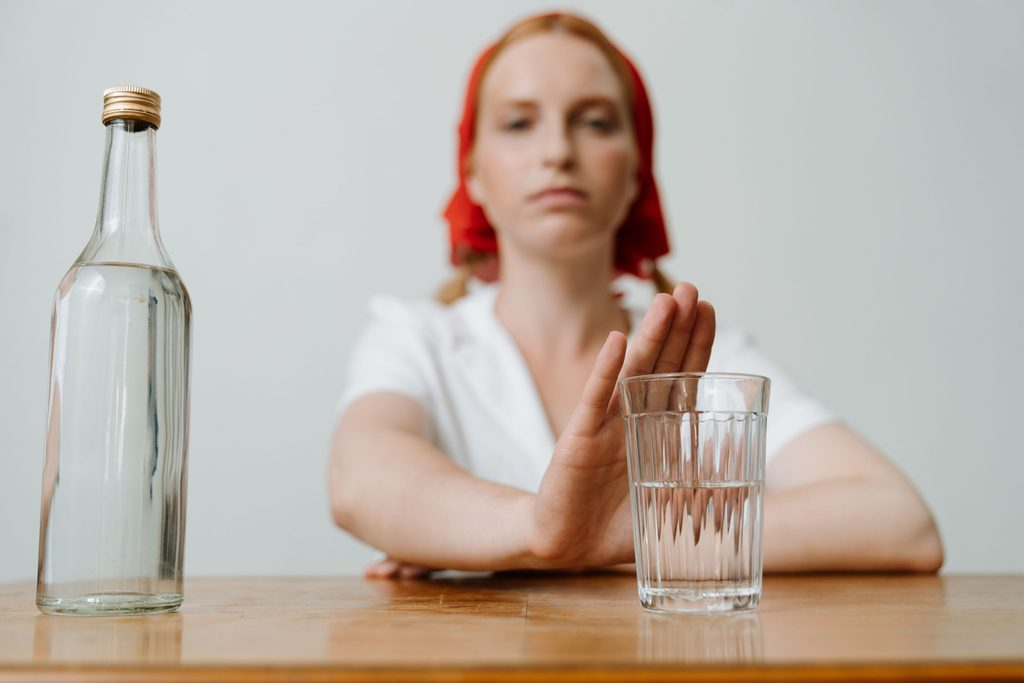
Why do you want to drink again?
It may be a pet peeve of mine but I call bullshit on anybody who says they like to drink alcohol because they “like the taste of it”. Yeah, right. I have never met somebody who enjoyed their first taste of alcohol. I literally spit out the first sip I ever tried. We learn to enjoy it and get used to it for other reasons. Mainly, because of the intoxicating effects.
So yeah, if you want to be able to drink again because you miss the taste, I don’t buy it. I loved smoking but I hated the taste and smell of cigarettes. And even if you really missed it, that’s not a good enough excuse to put your recovery in danger. It’s the same reason why people use condoms even though many like it better without. The experience may be great, but the consequences won’t.
There are many reasons why you may want to drink again. I already shared a few of mine—wanting to feel normal, thinking I was no longer an alcoholic, believing that one drink wouldn’t do any harm. You may have other reasons.
Recovery means more than quitting alcohol. It involves an entire change of one’s life, from social circles, to how you spend your weekends, to how you deal with your emotions and problems. Many people want to belong. They want to feel part of a group. They want to be able to ask someone out for a drink. How do you deal with this when you no longer drink?
I would urge you to consider all the things that sobriety has generated in your life, both currently and in the future. Is it worth it to put it all in danger for just one drink?
Think about what drinking would help you gain, if anything. Think about what benefits it will bring you. How will it help your life? How will it impact your health? Your career? Your relationships? Can you think of any benefit at all other than “fitting in”?
If you’ve already started drinking again
I understand that this article may be highly skewed towards the opinion not allowing yourself to try to drink moderately. This is what I believe in based on my lived experience and of those around me, as well as medical research.
There is still a lot of debate about what alcoholism really is. Scientifically, we know it’s a mental disorder—AUD—, but there are still a lot of people who consider it just a habit, or a character flaw, or an excuse for bad behavior. Having been on forums about AUD for a while and speaking about it on social media, I get a lot of comments from people saying that alcoholism and AUD are not a real thing. That every one has the option to decide to drink or not to drink.
Given all the misinformation and misconceptions, I prefer to keep things simple. If you are reading this article, it’s because you believe your drinking has become problematic (at the least). If you have already realized this, then I suggest you treat it like what it really is—a medical condition that requires diagnosis and treatment with medical professionals.
If you have absolutely decided to try to drink moderately or if you have already started drinking again, then all I can advise you to do is to make sure you have a safety net or some kind of support. As your doctor or therapist to help through this. Try a moderation management program with professionals. But most importantly, be honest with yourself. Ask yourself the following questions:
- Do you really need to drink?
- Do you really want to drink?
- Do you really believe you can drink moderately?
- Is this going to benefit you? Health, career, relationships, social circles, etc…
- Is drinking again going to make your life better?
- Do you really think you need to drink in order to feel or be “normal”?
- Do you really believe that AUD can be cured?
Reflect on those questions and then make your decision. As always, I’m rooting for you and I’m here if you ever need anything.